Description
Game Introduction
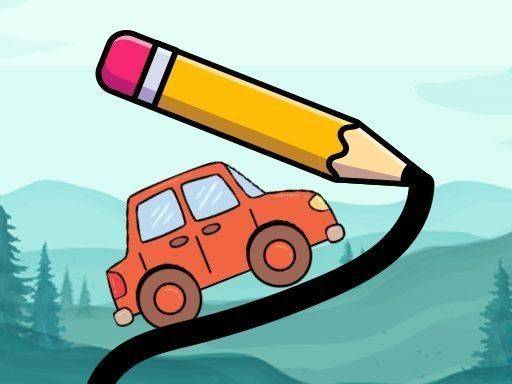
Sketch the Crossing is a creative puzzle game where players help vehicles reach their destination by drawing safe bridges. Each level presents a landscape with gaps and obstacles, requiring you to sketch a stable path that supports the weight of cars, trucks, or buses. The game blends simple drawing mechanics with light physics puzzles, offering an accessible and mentally stimulating experience without stressful time limits. The core objective is to create a bridge that is both functional and durable, ensuring the vehicle can cross safely. What makes this game unique is its combination of artistic expression and logical problem solving, as players must consider the shape, length, and thickness of their drawings to succeed. The puzzles are designed to be family-friendly, making it suitable for players of all ages who enjoy creative challenges.
How to Play
To play, use your mouse or finger to draw a line or shape between two platforms. Your drawing instantly becomes a physical bridge for the vehicle to drive across. The key challenge is ensuring the bridge is strong and stable; weak or poorly shaped bridges may cause the vehicle to fall. Consider the length, angle, and shape of your drawing, as some levels require simple straight lines while others need arched or supported structures. Controls are smooth and responsive, making drawing feel natural. Players typically experiment with different designs to find what works best for each gap, and the game encourages trial and error without penalty.
Game Features
Creative drawing mechanics that turn sketches into functional bridges. Family-friendly puzzles with no time pressure. Simple controls using mouse or touch. Multiple vehicle types including cars, trucks, and buses. Progressively challenging levels that introduce new obstacles. The game may also include various landscapes and environmental elements that affect bridge design, such as uneven terrain or moving platforms.
Tips for Success
Focus on creating balanced shapes that distribute weight evenly. Experiment with different bridge designs to see what works best for each gap. Pay attention to the vehicle type, as heavier vehicles may require thicker or more supported bridges. Practice drawing smooth lines to improve stability, and don't be afraid to redraw if your first attempt fails. Learning from each attempt helps you develop better strategies over time.